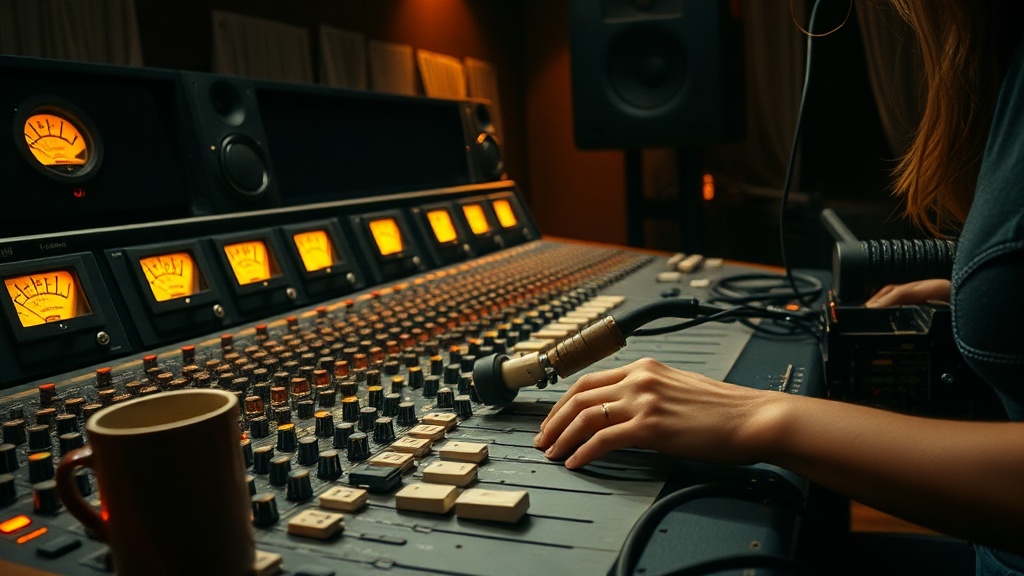
The Women Running the Boards: Female Engineers and Producers Who Actually Shape How Music Sounds

Look, I want to be straight with you about something.
I've been in a lot of recording sessions. Bars, studios, live rooms with questionable acoustics and one mic stand held together with gaffer tape. And I've noticed something over the years: the people who actually make a record sound like a record — not just "recorded," but sound good — are often running the room quietly while everyone else argues about tempo.
With International Women's Day this weekend, I'm not going to write you a list of "inspiring firsts" and call it a day. That's not this blog. What I want to do is talk about the actual technical craft — the engineering, the production chops, the gear knowledge — that a handful of women have brought to music, and why any working musician worth their calluses should know these names. (If you haven't read the piece on women guitarists who changed music, that's another angle on the same story.)
Behind the Glass Is Where the Real Work Happens
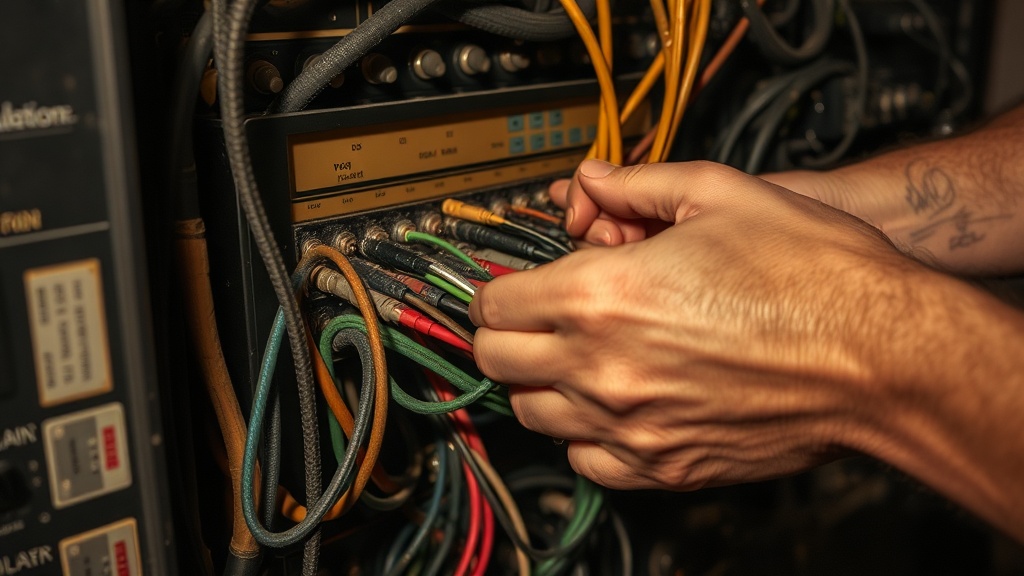
Here's something I tell younger players: the guitar player gets the credit. The engineer gets the sound.
Think about your favorite record. That specific warmth, the way the drums sit in the low-mid, the way a vocal breathes without being buried — that's not magic. That's someone at a console making a thousand micro-decisions over 10-hour days. It's deeply technical, deeply physical work, and it's been dominated by one demographic for decades in a way that has nothing to do with ability and everything to do with access.
Susan Rogers is where I'd start this conversation. She was Prince's recording engineer through Purple Rain, Sign O' the Times, and Around the World in a Day — arguably the most important run of records in the '80s. She's the person who wired up Paisley Park, who figured out Prince's live-to-tape workflow, who made the technical calls that let him record at 3 AM on a whim. Then she went back to school, got a PhD in psychoacoustics, and now teaches at Berklee. She's not just a great engineer — she's building the science of why certain sounds move us. That's a career arc worth understanding.
Sylvia Massey is another one I come back to. She's worked with Tool, System of a Down, Tom Petty, Johnny Cash. She's known for being technically unconventional in ways that should make every guitar player smile — she'll mic a speaker with a toilet bowl, run signal through unusual outboard gear, try things that shouldn't work and figure out why they do. Her book, Recording Unhinged, is genuinely one of the better practical recording texts I've read, and it's not a theoretical textbook. It's her actual session notes.
The Mastering Engineers Nobody Talks About (But Should)
Mastering is the last step before your music hits the public, and it's where a lot of records live or die. The mastering engineer is the final quality control — they're making sure your mix translates to a car stereo, earbuds, a PA at a venue, a phone speaker in a grocery store.
Emily Lazar is probably the most documented "first" in this space, though I hate reducing a career like hers to milestone-counting. She was the first woman to win Best Engineered Album, Non-Classical at the Grammys — that was 2019, for Beck's Colors. Her client list runs through Foo Fighters, David Bowie, Taylor Swift, Haim. She built a mastering room in New York called The Lodge and has been turning out work there for 25 years. The "first woman to win" framing is worth noting not because it's remarkable that she won — it's remarkable it took that long.
Mandy Parnell is a UK mastering engineer who's done Björk (Biophilia, Vulnicura, Utopia), Aphex Twin, James Blake — an enormous chunk of the experimental and electronic catalog that shaped the last 15 years. Her work on Vulnicura, which was recorded in grief and needed a mastering approach to match, would qualify her for any conversation about technical and emotional intelligence in the craft.
Leslie Ann Jones spent years as a staff engineer at Capitol Studios in Hollywood, then moved to Skywalker Sound in Northern California where she's now Director of Music Recording and Scoring. She's won multiple Grammys in classical and jazz recording — a technical category where the engineering is front and center because you can't hide behind production tricks. Her career spans four decades and two coasts.
Production: Where Technical Meets Creative
Engineering is craft. Production is craft plus decision-making about arrangement, vibe, what stays and what gets cut. It's the job where you're simultaneously operating equipment and telling the guitarist their part isn't serving the song.
Ann Mincieli has been Alicia Keys' engineer and producer for over 20 years. That's a working relationship built on deep technical trust — Keys is a musician who knows what she wants and needs someone who can translate it. Mincieli built her studio in New York, does the technical setup herself, and has consistently delivered records that hit differently than what you hear from producers chasing trends.
Linda Perry wrote and produced some of the biggest hits of the '00s — "Beautiful" for Christina Aguilera, work with Pink, Alicia Keys, Gwen Stefani. She's not a "tech" producer in the electronic sense, but she's deeply hands-on in the arrangement and sonic decision-making that shapes a record's sound. More importantly, she built her own studio because waiting for access wasn't working.
That's a pattern I notice across a lot of these careers: they stopped waiting for a seat at the table and built their own rooms.
What the Session World Is Slowly Learning
Here's my honest take from the floor.
When I'm on a session and there's a woman behind the glass, I've noticed something I'm just going to say plainly: she has usually done twice the preparation to get there that the guys in the room did. Not always. But often. Because she had to prove herself in rooms where the default assumption ran the other direction. This kind of preparation — knowing the gear, understanding what actually works versus what marketing promises — is the difference between a session that runs smooth and one that doesn't.
The downstream effect of that? She's usually very, very good at her job. She's heard every excuse, she's navigated every dismissal, and she's still in the room. That kind of career path produces focused, technically serious people. What actually works in session reality is what separates the pros from everyone else.
I'm not celebrating a demographic. I'm observing a pattern from actual sessions. The engineers and producers on this list aren't notable because they're women. They're notable because their work is exceptional — and part of understanding the full picture of music tech is acknowledging that excellence was distributed more evenly than the industry's hiring patterns ever were.
What's Changing in 2026
The numbers are still bad. Survey data from recording programs has consistently shown women significantly underrepresented in engineering and production tracks — I'd encourage you to look at what SoundGirls and the AES have published rather than take my word for it, but the direction of the data isn't ambiguous. A few things are shifting.
The home studio explosion leveled some of the access problem. You don't need to be hired at a studio to build skills anymore — you need a decent interface, a DAW, and the willingness to put in the hours. That's not nothing. (The same tech democratization that powers music production tools today has made it so anyone can start working in multitrack recording without gatekeepers deciding if they're allowed.)
Organizations like SoundGirls — co-founded in 2013 by Karrie Keyes (Pearl Jam's monitor engineer) and Michelle Sabolchick Pettinato (FOH mixer who's worked with Styx, Elvis Costello, and others) — are building direct mentorship pipelines. Not just "here's a panel of inspirational women" but actual apprenticeships and technical workshops. The kind of access that used to come through informal networks is getting formalized.
And frankly, the streaming era has been brutal to major label budgets, which means a lot of recording is happening outside traditional studio structures — which means the gatekeeping mechanisms of those structures matter less than they used to.
The Bottom Line
Guitar players love gear. Tabs. Techniques. But the thing that makes a record sound the way it sounds is almost never the guitarist. It's the person who mic'd the amp, made the gain staging call, figured out where the room mode was sitting, and pulled the right fader at the right time.
Those people have always been the best listeners in any room they've been in.
Some of them have been running those rooms for decades. More of them should be.
The best tool is still your ear and your hands — whoever's hands they are.
Leo Vance is a Nashville-based session player and guitar tech. He believes the best records are made by obsessive people with good ears and no patience for mythology.