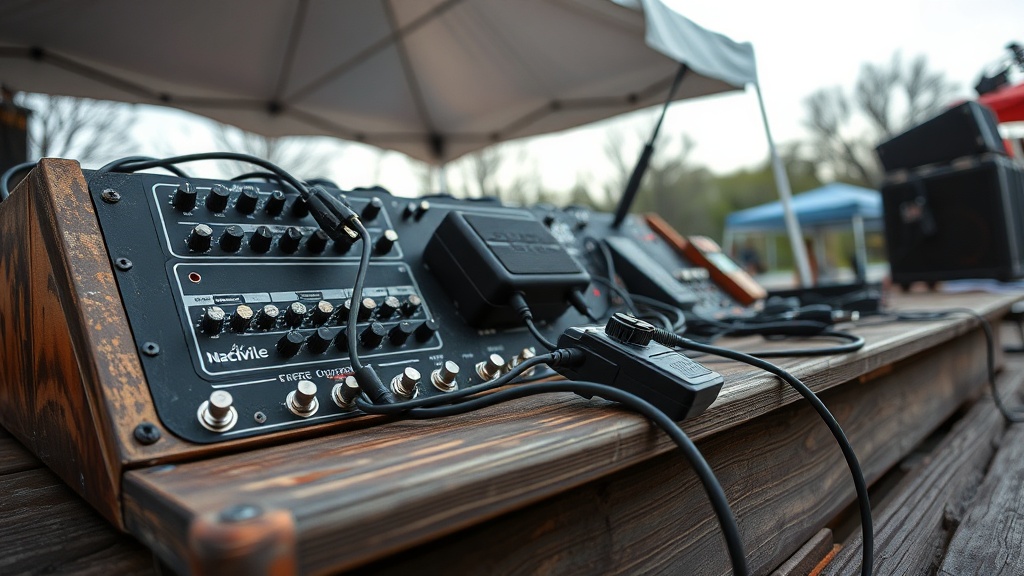
Spring Gig Tech: What Actually Works (And What Marketing Got Wrong)

I've got a stack of gear reviews in my inbox right now. I can tell you exactly what they all say without reading them: "Game-changing." "Studio-quality tone." "Future of live performance."
Here's what they don't say: whether any of it holds up when the humidity hits 78% at 6 PM during an outdoor set in April and your wireless starts droppin' packets like bad pizza samples at a county fair. Spoiler: the gear that actually changes your gigs doesn't come with marketing budgets.
That's the spring problem. And nobody in gear marketing land talks about it because they're filming unboxing videos in temperature-controlled studios, not loading in at 3 PM under a tent stage in Columbus, Ohio.
I've been doing spring outdoor gigs since 2015. I've watched more shows go sideways due to weather, power, and cable failure than due to playing. So here's what I actually use — and what I actually think of the 2026 tech refresh.
The Wireless Problem Nobody Wants to Admit
Spring humidity is not summer humidity. It's worse — because it swings. You load in at 60°F, it hits 74°F by set time, and your wireless transmitter's frequency response shifts. Older 2.4 GHz systems that worked fine all winter suddenly compete with every Bluetooth speaker and smartphone within 300 feet.
I've been running Line 6's XD-V series for years, and the move to newer UHFR systems made a real difference in crowded RF environments. But in 2025–2026, the thing that actually changed my setup was the shift to true diversity receivers with real-time RF scanning. Not new technology — but the price point finally dropped to where a working musician can actually buy it without selling a kidney.
The practical rule: if your wireless doesn't have automatic frequency scanning and won't show you the RF environment before you pick a channel, you're gambling every outdoor show. That's fine when the stakes are low. When you've got a 45-minute festival slot, it's not fine.
What I run now: a dual-channel system with the receiver velcro'd to the back of my pedalboard where I can see the signal indicators mid-song. Non-negotiable.
One more thing on wireless: keep a 20-foot cable coiled in your bag. Always. The backup that takes 30 seconds to plug in is the best gear purchase you'll ever make.
What's Actually In My Van (vs. What Gear Reviewers Recommend)
I've seen "guitarist multitool" lists that include things like a portable oscilloscope, a dedicated frequency analyzer, and a signal generator. Look — if you're a touring guitar tech for a stadium act, that's relevant. If you're a working musician playing 150-seat rooms and outdoor stages, carry that stuff and you'll hate yourself.
Here's what actually belongs in your gig bag. All of it. Every single gig.
The non-negotiables:
- A cable tester. I'll get to this.
- A 9V battery pack with at least 10,000 mAh — not for your phone, for your board.
- Two sets of strings pre-stretched and in their packets, labeled by gauge.
- A butt connector crimper and a bag of connectors. If a cable dies mid-show, I can rebuild a working patch cable in four minutes. Bought mine at an auto parts store.
- A Leatherman Wingman. Not a guitar-specific tool. A Leatherman.
- Gaffer tape — not electrical tape, not duct tape, gaffer tape. It doesn't leave residue on your finish and it doesn't unravel.
What I ditched:
- The tuner pedal I used to keep as backup. My main tuner clips. Clip tuner backup is a phone app — free. Done.
- The spare power supply. I now carry a daisy-chain and a universal power supply with interchangeable tips. Weighs less, covers more ground.
- The giant first aid kit for my board. Cable, power, signal path. Those are the three things that fail. I carry spares for those, not for edge cases.
The multitool fantasy is real in this industry. Every gear list is secretly someone trying to sell you something. The actual traveling musician is trying to get everything into a case that fits behind the passenger seat.
Power Management for Long Outdoor Sets
This one changed for me in 2025 when I started doing a proper power audit on my board.
Most musicians don't know how much current their board actually draws. They bought a power supply that "has enough outputs" and called it done. Then they wonder why their board sounds like a dying dentist drill after two hours in the heat.
Here's what actually drains you:
Reverb and delay pedals with wet/dry analog paths. These are the quiet current hogs. In my experience, high-end digital reverbs and delays vary wildly — I've measured anywhere from 150 mA to well over 300 mA per unit depending on the DSP clock speed. Stack two and you can blow through your supply's headroom fast.
Wireless transmitter on the board. People forget. That transmitter is sucking continuous power, not just signal-path power.
Pedals running at 18V on a supply that's technically capable but thermally stressed. Outdoor heat in April isn't brutal, but 85°F in direct sun + a full aluminum pedalboard sitting on asphalt equals a supply working harder than it should.
What I did: I bought a USB power meter — $12, plugs in between my supply and any output — and measured everything on my board. Took 20 minutes. Found out I was drawing 1,800 mA on a supply rated for 2,000 mA with zero thermal headroom. Moved two pedals to a second supply I already owned. Problem solved.
The 2026 shift here is battery-powered supplies getting genuinely good. In my testing this past season, previous generation lithium-based supplies I'd used were barely clearing two hours at full draw. Current generation units from a handful of smaller builders are claiming 4–5 hours at reasonable loads, and in my experience that held up close enough to be useful for festival-slot work. Your mileage will depend on your actual board draw, so do the math with a meter before you bet a show on it.
For long outdoor sets — three hours, which I've done at corporate events and multi-act outdoor festivals — you want physical power if it's available. If not, do the math before you get on stage, not after you start hearing noise at the bottom of your signal chain.
The $35 Tool That Paid For Itself Night One
A cable tester.
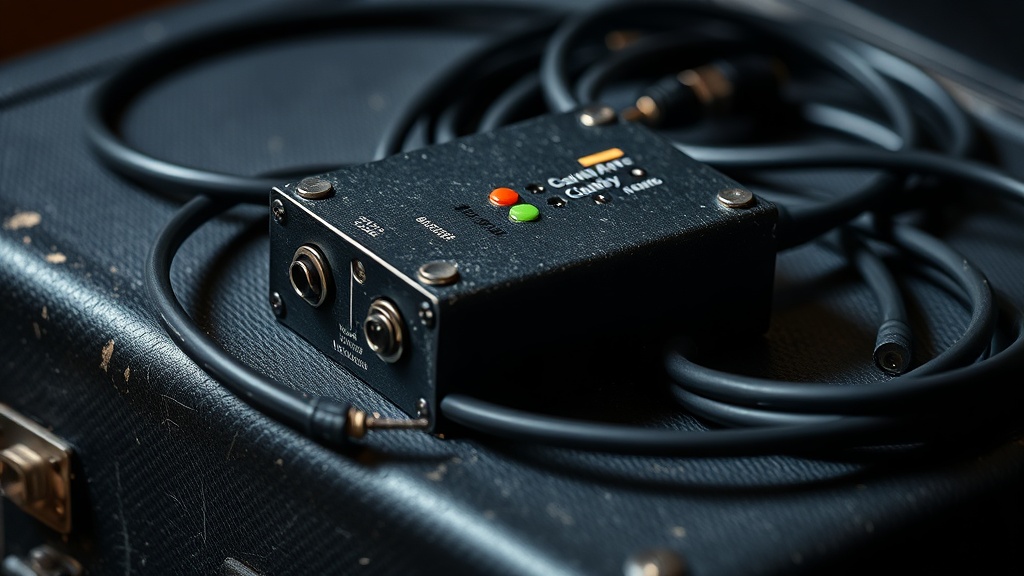
I'm serious. It's not glamorous. It's not $300. It doesn't have firmware updates. It is a small box with two jacks, a battery, and LEDs.
Here's what happened the first night I started using one religiously: I found a cable in my bag that had a flaky solder joint at the tip — intermittent break. Only triggered under lateral stress. I'd used that cable 50 times. Never noticed. Set up on stage under pressure with that cable in the main signal path and I'd have spent ten minutes chasing a ghost.
The discipline is: every cable that goes into the bag gets tested. Not when you buy it. Every time it goes back in the bag. Takes thirty seconds per cable. For a typical gig bag with eight cables, that's four minutes.
The cable tester I use also catches:
- Ground lifts (one LED, not two)
- Crossed wires (though I've only seen this in a cheap budget cable I'll never buy again)
- Continuity breaks, even intermittent ones if you flex the cable while testing
In 2026, there are fancier options — multi-function devices that also test XLR, TRS, and MIDI. Fine. Buy the fancier one if you want. The point isn't the specific tool — it's the habit.
Gear fails at the worst moments not because it's broken-broken, but because it's been degrading and nobody checked. That's most live sound disasters. Not catastrophic failure — gradual failure nobody caught.
What Actually Changed in 2026 That Matters
I'll be honest: most "new" gear every year is noise. Firmware updates, color options, and minor circuit tweaks marketed as revolutions. But a few things genuinely shifted in the last year or so.
Wireless latency. This one's real. The 2.4 GHz systems I was running a few years ago felt noticeably laggy when standing next to a loud amp — spec sheets on older units showed 5 ms and up, and I could feel it. The newer generation systems I've played through are tighter. Some spec under 3 ms, a few advertising around 2 ms. Whether you'll notice the difference depends on how you play and where you stand. But for players who felt something was off with their old wireless and couldn't name it — this is worth investigating.
IEM (in-ear monitor) technology for working musicians. The price gap closed significantly. Systems I was pricing at over a thousand dollars three years ago are now available in the $350–$450 range, and the RF management on the new units is better. For outdoor gigs with no stage monitors — which is more common than people think at smaller festival stages — this matters a lot.
Rechargeable 9V batteries that are actually reliable. I resisted these for years because the early generation was garbage — inconsistent voltage, weird noise floors, discharged faster than rated. The current lithium-ion 9V cells I've been running are legitimately stable and the charge indicators work. I've moved my pedalboard over mostly to rechargeables for the stuff that doesn't need isolated power. Saves money over a season. Not exciting, but real.
What I'm watching but not buying yet: the AI-powered noise gates and amp modelers claiming to adapt to venue acoustics in real time. I've heard them demoed. I'm not convinced. Show me reliability data from six months of live touring, not a controlled demo room, and maybe I'll change my mind.
The Actual Bottom Line
Spring outdoor gig season starts now. The shows are different — longer load-ins, more RF competition, humidity that moves fast, power infrastructure that's sometimes a single 15-amp circuit for four acts.
You don't beat those conditions by buying more stuff. You beat them by knowing exactly what's in your bag, knowing it all works, and having a backup plan for the three things most likely to fail: your signal path, your power, and your wireless.
Everything else is marketing.
Go test your cables. I'll be in the van.
— Leo