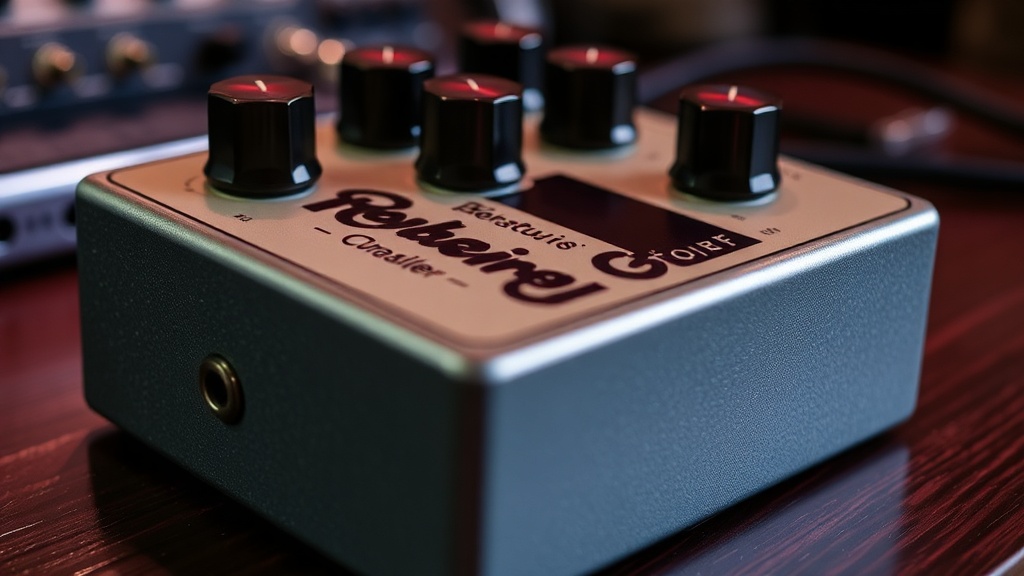
6 Boutique Overdrive Pedals That Define Modern Rock Tone

The Transparent Mid-Boost
The High-Gain Klon Clone
The Bluesy Low-Gain Classic
The Aggressive Mid-Hump Drive
The Smooth Compression Overdrive
The Vintage-Style Boost
This guide identifies six boutique overdrive pedals that currently define the standard for modern rock, indie, and alternative guitar tones. You will learn the specific sonic characteristics of each pedal, which amp types they pair best with, and how to integrate them into a professional pedalboard to achieve professional-grade saturation without losing your fundamental note clarity.
The Importance of Gain Stages in Modern Rock
In a professional touring setup, an overdrive pedal is rarely just about adding "distortion." It is about managing the relationship between your guitar's output and your amplifier's preamp. Modern rock relies on a hierarchy of gain. You might use a transparent overdrive to push a single-coil pickup into a crunch, or a heavy-duty boutique drive to sustain a complex chord progression. Understanding these nuances prevents the common mistake of "muddying up" your signal with too much mid-range or excessive low-end compression.
When building a professional rig, you must consider how your pedal interacts with your amp's headroom. A pedal that sounds great on a Fender Deluxe Reverb might sound completely different when plugged into a Marshall JCM800. The following selections represent the pinnacle of boutique engineering, offering predictable, high-quality clipping that works across various signal chains.
1. Analogman King of Tone
The Analogman King of Tone is widely considered one of the most versatile overdrive pedals ever produced, modeled after the legendary blues-breaker circuits. It features two distinct channels: one for a lighter, transparent boost and another for a more aggressive, saturated drive. This makes it a staple for players who need to transition from subtle rhythmic texture to a full-blown lead tone without stepping on a different pedal.
Sonic Characteristics: The King of Tone excels at maintaining the natural character of your guitar. If you are playing a Telecaster through a clean Vox AC30, this pedal will enhance the chime rather than masking it. The gain structure is highly touch-sensitive, meaning your pick attack directly dictates how much clipping occurs.
Best Use Case: Use the "Side A" setting for adding a slight edge to your rhythm parts during verses, and switch to "Side B" for a thick, singing sustain during a chorus. It is an essential tool for players who want a single pedal to handle multiple roles in a live set.
2. Fulltone OCD (Obsessive Compulsive Drive)
While Fulltone has seen many changes over the years, the OCD remains a benchmark in the boutique overdrive world. It is a high-headroom pedal designed to provide a thick, heavy saturation that feels more like a high-gain amp than a standard pedal. It is particularly effective for players who want to move beyond basic blues and into the realms of hard rock and heavy indie.
Sonic Characteristics: The OCD provides a significant boost in the low-mid frequencies, giving your tone a "weight" that is often missing from cheaper overdrive circuits. It has a very wide dynamic range, allowing you to control the level of grit through your volume knob or your playing intensity.
Best Use Case: This is the perfect pedal for players using humbucker-equipped guitars like a Gibson Les Paul. It provides enough low-end punch to drive a heavy riff without becoming a "mushy" mess. If you are looking for a more aggressive sound that still retains a sense of structure, this is your go-to.
3. Mike Palmer Audio - The Blue/Green Series
Mike Palmer Audio produces pedals that focus on the precision of the clipping stage. His designs often lean toward the "transparent" side of the spectrum, meaning they aim to amplify your existing tone rather than replacing it with a new one. This is a crucial distinction for players who have spent significant time dialing in a specific amp tone and simply want to add a layer of grit.
Sonic Characteristics: These pedals are known for their extremely low noise floor and high-fidelity response. You won't experience the harsh, "fizzy" high-end common in budget overdrive pedals. Instead, you get a smooth, organic clipping that feels integrated into your signal path.
Best Use Case: These are ideal for session players who need to be able to adapt to different studio environments. Because they are so transparent, they won't fight with the engineer's microphone placement or the room's natural acoustics. They are also excellent for players who want to add subtle texture to their playing without completely changing their core sound.
4. JHS Pedals - Morning Glory
The JHS Morning Glory is a modern classic based on the "transparent overdrive" philosophy. It is designed to be a "clean boost with a bit of grit," making it an incredibly useful tool for adding a professional sheen to your tone. It is particularly popular among players who use single-coil pickups and want to add a sense of "bloom" to their notes.
Sonic Characteristics: The Morning Glory is characterized by its bright, airy top end and its ability to make your guitar feel more "present" in a mix. It doesn't add much heavy distortion, but it does add a beautiful, harmonic richness that makes your playing sound more sophisticated and polished.
Best Use Case: This is an excellent pedal to place at the beginning of your chain if you want to push your existing drive pedals harder. It can also serve as a standalone "always on" pedal to add a bit of life to a sterile-sounding clean channel. For those interested in more complex textures, pairing this with essential effects pedals for ambient soundscapes can create a massive, professional-sounding wall of sound.
5. Love Planet - The Klon Centaur (and high-end clones)
While the original Klon Centaur is a legendary and expensive piece of history, the "Klon-style" circuit has become a fundamental building block for modern rock tone. Whether you are buying an original or a high-quality boutique clone like a Wampler Klone, this circuit provides a specific type of mid-range boost that is indispensable for many genres.
Sonic Characteristics: The hallmark of this circuit is the "mid-hump." It pushes the frequencies that allow your guitar to cut through a dense mix of drums and bass. It provides a smooth, creamy overdrive that feels very "musical" and is famously easy to play.
Best Use Case: The Klon-style drive is the ultimate "glue" pedal. It works exceptionally well as a boost in front of a high-gain amp to tighten up the low end, or as a standalone overdrive for a classic rock sound. It is the secret weapon for players who feel their tone is getting lost in the mix during a loud live performance.
6. Analogman Super Bee
The Super Bee is a boutique take on the classic "Tube Screamer" style circuit, but with much more refinement and control. While a standard Tube Screamer can sometimes be too mid-heavy or "honky," the Super Bee offers a more balanced and sophisticated approach to mid-range enhancement.
Sonic Characteristics: It provides that classic, focused mid-range punch that helps a guitar stand out, but it does so with a much smoother high-end response. It is less "aggressive" than a standard overdrive, making it a more versatile tool for various genres, from indie rock to blues-rock.
Best Use Case: If you find that your current overdrive is too harsh or "ice-picky" in the high frequencies, the Super Bee is the solution. It is an excellent choice for players who need to add weight and presence to their tone without sacrificing the clarity of their high-end transients.
How to Choose the Right Overdrive for Your Rig
Choosing between these six pedals comes down to your primary goal. Are you looking to add a subtle layer of texture, or do you need a heavy-duty drive to carry your main riff? Follow these three rules to make the best decision:
- Identify your "Base" Tone: If you have a high-gain amp, look for transparent overdrives like the JHS Morning Glory or the Analogman King of Tone. If you have a clean amp, look for something with more weight like the Fulltone OCD.
- Consider Your Pickups: Single-coil players often need more mid-range and low-end support (Klon-style or Super Bee), while humbucker players often benefit from pedals that add brightness and clarity (Morning Glory).
- Test the Interaction: Never buy a boutique pedal without knowing how it interacts with your specific amplifier. A pedal that sounds "good" in a YouTube video might sound "bad" when paired with your specific amp/cab combination.
The goal is not to own every pedal on this list, but to understand the specific "job" each one performs. A professional rig is built on intentionality, not just accumulating gear. Use these tools to refine your sound, not to hide a lack of technique.