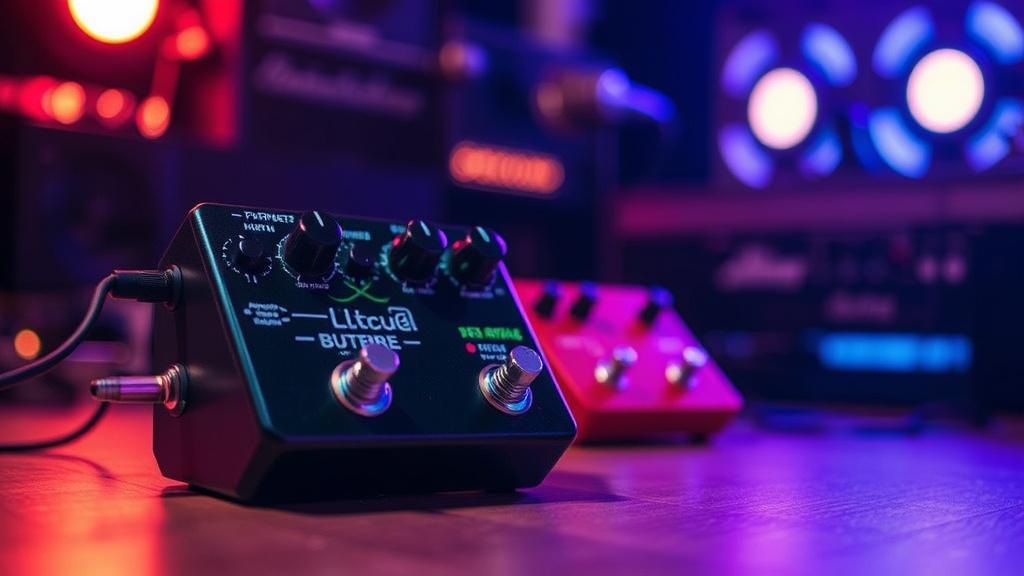
5 Essential Effects Pedals to Level Up Your Ambient Soundscapes

The Deep Space Reverb
The Infinite Delay Loop
The Shimmering Modulation
The Granular Texture Generator
The Looper for Layering
I spent ten years playing the circuit in the Midwest—tiny stages in basement bars, half-empty lounges in Ohio, and dimly lit clubs where the air was thick with humidity and cheap beer. Back then, my pedalboard was a simple affair: a drive, a boost, and a basic delay. I thought "tone" was just about how much grit you could squeeze out of a tube amp. But as I transitioned from session work to more nuanced sound design, I realized that the most powerful tool in a guitarist's arsenal isn't always a high-gain crunch. Sometimes, it’s the ability to create space, texture, and atmosphere.
Ambient music—those sprawling, cinematic soundscapes that feel more like a landscape than a song—can feel intimidating. A lot of players think you need a PhD in music theory or a $5,000 modular synth setup to pull it off. That is a lie. Ambient playing is a blue-collar craft. It’s about patience, touch, and knowing which knob to turn to make a single note hang in the air like smoke. It’s about the texture of the sound, not just the notes you play.
If you want to move beyond standard rhythm playing and start building deep, immersive sonic environments, you need more than just a volume pedal. You need a specific set of tools. Here are the five essential types of effects pedals you need to level up your ambient soundscapes.
1. The Deep, Lush Reverb
If the ambient genre had a heartbeat, it would be the reverb pedal. In a standard rock setting, reverb is an effect used to add a sense of space. In ambient music, the reverb is the instrument. You aren't just playing a melody; you are playing into a cavernous environment that you have built yourself.
When looking for an ambient reverb, you aren't just looking for "Hall" or "Room" settings. You are looking for Shimmer and Cloud algorithms. Shimmer reverbs add an octave-up pitch shift to the reverb tail, creating a celestial, ethereal quality that sounds almost like a synthesizer. Cloud reverbs, on the other hand, use granular synthesis to break your signal into tiny fragments, creating a lush, swelling texture that feels organic and unpredictable.
Pro Tip: Don't be afraid to push your decay times to the extreme. If you’re working on a studio project and need to capture these massive sounds, make sure you have a portable budget recording studio setup that can handle the low-end frequencies that heavy reverb often generates. High-end ambient textures can easily muddy up a mix if your recording environment isn't dialed in.
Types of Reverb to Look For:
- Algorithmic Reverb: Great for those "impossible" spaces that don't exist in the real world.
- Shimmer Reverb: Adds that crystalline, high-end magic.
- Granular Reverb: Perfect for creating those "glitchy," textured swells.
2. The Infinite Delay (The Time-Based Architect)
While reverb handles the space, delay handles the time. For ambient players, a standard "slapback" or "echo" isn't enough. You need a delay pedal that can handle long, repeating trails and, ideally, a "hold" or "freeze" function. This allows you to capture a single moment in time and let it repeat indefinitely, creating a bed of sound over which you can play new melodies.
Analog delays are wonderful for warmth and a certain "lo-fi" grit, but for true ambient work, digital delays often provide the clarity needed for complex textures. A delay with a high-quality modulation circuit will add a sense of movement, making the echoes feel like they are drifting or swaying rather than just repeating mechanically.
When you are layering delays, remember that timing is everything. If your delays are too rhythmic, you’ll end up playing a repetitive loop rather than a fluid soundscape. If you find yourself getting stuck in repetitive patterns, it might be time to address the burnout cycle that often comes with over-practicing the same technical patterns. Ambient music should be a meditative practice, not a repetitive chore.
3. The Modulated Tremolo and Vibrato
Ambient music can sometimes feel "static" if you aren't careful. If you have a long, sustained note with a massive reverb tail, it can become a flat line of sound. This is where modulation comes in. Tremolo (volume modulation) and Vibrato (pitch modulation) add the "pulse" to your textures.
A slow, subtle tremolo can make a sound feel like it’s breathing. It adds a sense of life to the decay of your notes. On the other hand, a heavy vibrato can give your ambient swells a slightly unsettling, vintage, or "warped tape" quality. This is a staple of the "Lo-Fi" ambient aesthetic. It makes the music feel nostalgic and imperfect, which is often much more engaging than something perfectly polished.
The Technical Detail: I always tell my students that modulation should be felt, not just heard. If the listener is thinking, "Oh, that's a cool tremolo effect," you've probably pushed it too far. It should be a subtle movement in the background that makes the sound feel alive.
4. The Looper: Your Unsung Hero
You cannot talk about ambient music without mentioning the looper. In a live setting, the looper is what allows a single guitarist to sound like a full ensemble. It is the foundation upon which your soundscapes are built. You record a base layer—perhaps a soft, rhythmic swell or a low-frequency drone—and then you build your melodies on top of it.
The key to using a looper for ambient music is layering. Don't just loop a riff. Loop a texture. Use your reverb and delay to create a wash of sound, record that loop, and then use your guitar to play "against" that wash. This creates a sense of depth and polyphony that is essential for the genre.
As you develop these skills, you might find yourself wanting to record these complex layers at home. If you're looking to refine your workflow, check out our guide on building a portable budget recording studio. Having a reliable way to capture your loops and layers is the difference between a fleeting moment and a finished track.
5. The Pitch Shifter / Octave Pedal
The final essential tool is the pitch shifter. This is the "secret sauce" for creating massive, cinematic textures. An octave pedal allows you to drop your signal an octave below or raise it an octave above. In an ambient context, dropping an octave creates a deep, sub-bass drone that provides a foundation for your music, making it feel much larger than a standard guitar.
Raising the pitch, especially when combined with a shimmer reverb, creates those soaring, orchestral sounds that define modern ambient guitar. It transforms your instrument from a stringed box into a tool for sound design. Whether you are using it to create a deep, brooding atmosphere or a bright, heavenly swell, the pitch shifter is indispensable.
Note: Be careful with your signal chain. If you use a pitch shifter after a heavy delay or reverb, the effect can become a chaotic mess of artifacts. Generally, you want the pitch shifter to be relatively early in your chain to ensure the pedal can accurately track your notes.
Putting It All Together: The Workflow
Building an ambient soundscape isn't about hitting a bunch of pedals at once. It’s about a disciplined approach to your signal chain. Here is a standard "blue-collar" workflow I recommend:
- The Foundation: Start with a clean or slightly overdriven tone. If you want more movement, engage a subtle tremolo.
- The Space: Engage your delay. Set a long decay and a bit of modulation to create a sense of movement in the echoes.
- The Atmosphere: Turn on your reverb. This is where you set the "size" of your world. If you have a shimmer setting, now is the time.
- The Layer: Use your looper to capture a drone or a texture. Once that loop is running, you have a canvas.
- The Performance: Now, play. Use your touch and dynamics to interact with the sounds you've created.
As you dive deeper into this world, don't forget to maintain your physical and mental well-being. Much like how we suggest an audit of your setup to ensure your gear is ready for the season, make sure you are auditing your playing habits. Are you getting lost in the "gear porn" of buying more pedals, or are you actually practicing the art of sound design? Ambient music requires a high level of patience and a willingness to sit with a single sound for a long time.
The goal isn't to be the fastest player in the room; it's to be the one who creates the most memorable atmosphere. Go grab your pedals, turn up the decay, and start building your world.