You Don't Need Perfect Pitch to Learn Songs by Ear — You Need a System

You Don't Need Perfect Pitch to Learn Songs by Ear — You Need a System
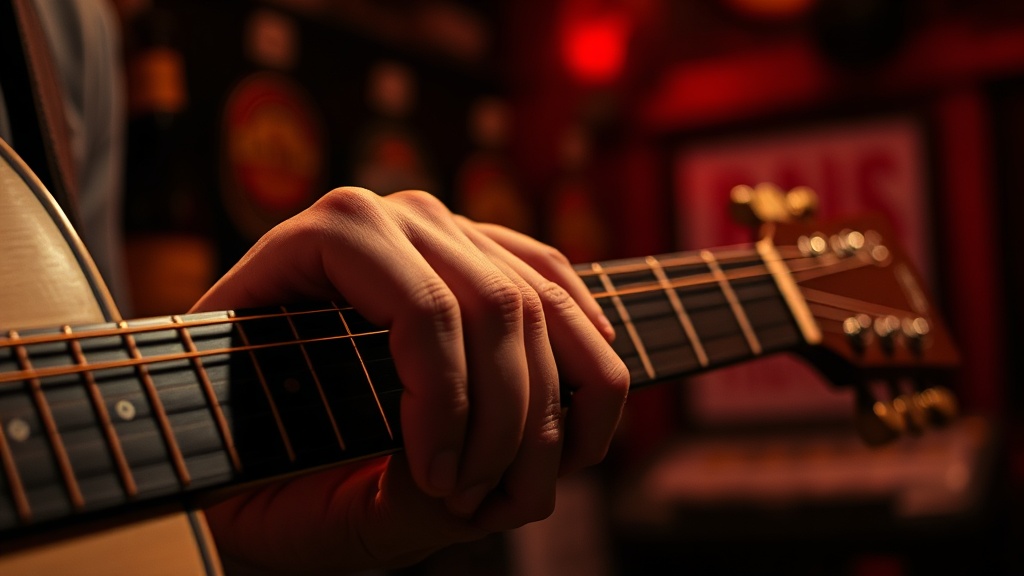
Excerpt: Forget the myth that learning by ear is a gift. Here's the dead-simple, no-theory-degree method I use to figure out any song in a bar set — usually before the second verse.
Category: Tutorials & Techniques
Tags: learn by ear, ear training, guitar practice, playing songs, bar gigs, rhythm guitar
Every time I mention learning songs by ear, somebody in the comments acts like I said "just fly." Like ear training is some genetic lottery you either won or lost at birth.
It's not. Perfect pitch is rare. Relative pitch — the thing that actually matters — is a skill. And you don't even need great relative pitch to start figuring out songs without tabs. You need a system.
I've been doing this since my bar band days, when we'd get a request and have about 90 seconds to figure it out before the crowd moved on. Nobody was pulling up Ultimate Guitar on a Razr flip phone in 2014. You listened, you found the root, you played. Here's how.
Step 1: Find the Key (It Takes 30 Seconds)
Play the song. Listen to where it "rests" — the note that feels like home. Hum it. Now find that note on your low E string.
That's probably your key. Not always, but about 80% of the time for pop, rock, country, and blues — the genres you're actually getting requests for at a bar gig.
If you're in standard tuning, run your index finger up the low E from the open string. When the fretted note matches what you're humming, stop. That's your root. If you tune to Eb like I do, shift everything up one fret in your head (or just know your fretboard — you should anyway).
Pro tip: The last note of the vocal melody in the chorus almost always lands on the root. Start there.
Step 2: Assume the Obvious Chords First
Here's where a tiny bit of theory saves you a ton of time — but I promise it's the kind of theory that fits on a napkin.
If the key is G, your first guesses should be:
- G (the I chord)
- C (the IV chord)
- D (the V chord)
- Em (the vi chord)
That's it. Those four chords cover an absurd percentage of songs. I'm not exaggerating — I've written about how many "iconic" songs are built on the same three or four changes. The music industry runs on I-IV-V-vi like a Honda Civic runs on regular unleaded.
So once you've found the key, just try those four chords over the song. You'll nail at least two or three of them immediately.
Step 3: Listen to the Bass, Not the Guitar
This is the trick that changed everything for me. Stop trying to hear the guitar part. Listen to the bass.
The bass player is almost always hitting the root note of whatever chord is happening. It's louder, lower, and easier to isolate in a mix than a strummed guitar buried under vocals and keys. If you can hear the bass note move from G to C, you just identified the chord change without any guesswork.
On a phone speaker, the bass gets buried. Use headphones or earbuds, even cheap ones. The low end is where your answers live.
Step 4: Map the Changes to the Lyrics
Don't think about chord changes in terms of beats or bars yet. Think about them in terms of words.
Play the song and say out loud: "The G starts on 'I,' the C hits on 'can't,' the D comes in on 'stop.'" Whatever the lyrics are. Anchor each chord to a word.
This is how every working cover musician I know operates. We don't count bars. We remember that the chord changes on "thunder" or "baby" or whatever the hook word is. It's faster, more intuitive, and it survives the chaos of a live stage where you can't hear the monitor.
Step 5: Don't Sweat the Voicings (Yet)
When you're first learning a song by ear, play open chords or barre chords — whatever you default to. Don't worry about whether the original uses a Cadd9 or a fancy jazz voicing. Get the changes right first.
Once you've got the progression locked in, then you can go back and refine. Maybe the original is using a capo on the 2nd fret and playing open shapes. Maybe it's barre chords up the neck. That's finesse. Finesse comes after function.
I've played hundreds of gigs where I figured out a song with open cowboy chords and nobody in the crowd noticed or cared. They wanted to hear the song. They got the song. Mission accomplished.
The "Weird Chord" Problem
Okay, but what about when the song throws a curveball? You've got G, C, D, Em nailed down and then suddenly there's a chord that doesn't fit.
Nine times out of ten, it's one of these:
- The II chord (in G, that's an A or Am). Common in pre-choruses.
- The bVII chord (in G, that's F). Classic rock move — think Tom Petty.
- A borrowed minor (like Cm instead of C in the key of G). Gives that "emotional gut punch" feeling.
If none of those work, the song might be doing something genuinely unusual. At that point, slow down, isolate that section, and hunt for the bass note. Then figure out if the chord on top is major or minor. That's all you need — root + quality. You can refine from there.
How to Practice This (Without It Feeling Like Homework)
Put on a playlist you actually like. Pick a song you've never learned. Pause it after the first chorus. Try to figure out the chords using the steps above. Then look up the chords online and check yourself.
You'll be wrong sometimes. That's the point. Every wrong guess trains your ear for the next song. After a month of doing this for 10 minutes a day, you'll start hearing chord changes before you consciously identify them. It becomes instinct.
And unlike grinding scale patterns up and down the neck, this kind of practice directly translates to the thing you actually want to do: play songs.
Why This Matters More Than Reading Tabs
Tabs are a crutch. I say that as someone who runs a site with "tabs" in the name. Half the tabs online are wrong anyway — I've audited enough of them to know. And even when they're right, reading tabs teaches you to reproduce that specific arrangement. Learning by ear teaches you to understand music.
When you can hear a song and play along, you're not dependent on someone else's transcription. You're not frozen when the singer calls an audible and changes the key. You're not lost when a new request comes in that you've never rehearsed.
You're a musician. That's the difference between a player and a tab reader.
Start tonight. One song. Headphones in, guitar on your lap, phone on the arm of the couch. Find the key. Guess the chords. Check yourself. Repeat.
Your ears are better than you think. You've just never given them a real job.