
The Right-Hand Rhythm Trick Most Guitar Players Ignore (And Why It Fixes Everything)

Quick Tip
Keep your right hand moving like a pendulum at all times—hit or miss, the motion never stops.
Alright, listen… most of you don’t have a “left hand problem.” Your fingers aren’t too slow. Your chords aren’t too weak. You don’t need another scale diagram taped to your wall.
You’ve got a right hand problem.
I’ve seen it a thousand times—guys who can play all five pentatonic boxes but still sound like they’re tripping over their own feet. Then some kid with three chords walks in, strums steady, and suddenly the whole room locks in. That’s not magic. That’s rhythm.

The One Trick: Lock Your Right Hand Like a Drummer
Here’s the deal: your right hand should act like a drummer, not a guess machine.
Most players treat strumming like it’s optional—down when they feel like it, up when it’s convenient. That’s why it sounds like a loose shopping cart rolling downhill.
The trick is stupid simple: your hand never stops moving.
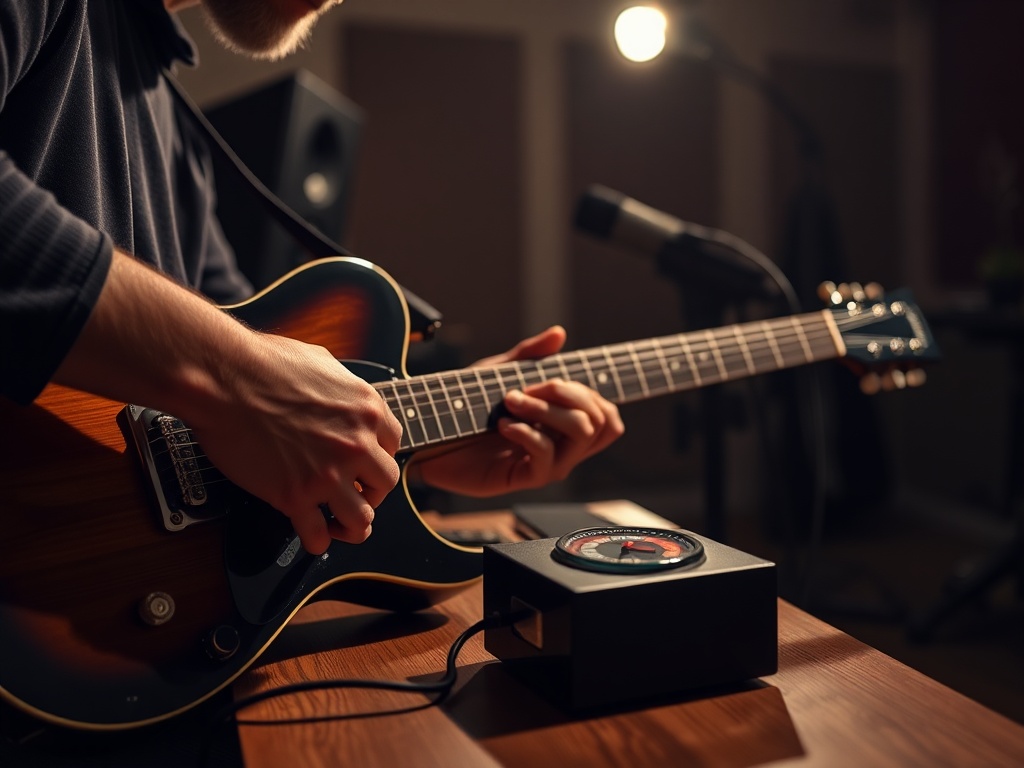
Even when you’re not hitting the strings, your hand keeps that down-up motion going like a pendulum. Think of it like a hi-hat ticking away. You’re just choosing when to actually hit the strings.
That’s it. That’s the “Secret Sauce.”
Why This Fixes Everything (Yeah, Everything)
Real talk—when your right hand locks in, three things happen immediately:
- Your timing tightens up — you stop rushing the easy parts and dragging the hard ones.
- Your chords sound cleaner — because you’re hitting them consistently instead of randomly.
- Your playing feels like music — not a collection of notes you memorized off some tab.
That last one is the big one. Nobody in a bar ever said, “Wow, that guy knows his modes.” They say, “That groove feels good.”
If your rhythm sucks, everything built on top of it collapses. If your rhythm is solid, you can get away with murder.

The 5-Minute Fix You Can Do Tonight
I’m not giving you a 40-step routine. You don’t need that. Here’s your fix—five minutes, no excuses.
Step 1: Kill the Sound
Mute the strings with your left hand. Don’t even worry about chords yet.
Step 2: Set a Slow Pulse
Put on a metronome around 60 BPM. Yeah, it’s boring. Deal with it.
Step 3: Keep the Engine Running
Strum down-up-down-up nonstop. No stopping. No hesitation.
Step 4: Miss on Purpose
Start skipping hits—only strum on certain beats. But your hand keeps moving the whole time.
That’s where it clicks. You realize rhythm isn’t about hitting—it’s about motion.

The Knuckle-Buster: Where Most People Fall Apart
Here’s where things get ugly.
You’ll be cruising along, feeling good, then you try to change chords—and your right hand freezes for a split second.
That’s the crack in your foundation.
If your right hand stops, even for a heartbeat, the groove is gone. Doesn’t matter how clean the chord was—you lost the feel.
So here’s the rule: your right hand is the boss. Your left hand works for it.
If you can’t make the chord change in time, simplify it. Drop fingers. Play partial chords. Heck, play one note if you have to—but keep that right hand moving.

What This Sounds Like in Real Songs
Think about any three-chord song that actually feels good. It’s not the chords—it’s the consistency of the strum.
You ever hear someone butcher an easy song? That’s not because it’s hard. It’s because their right hand is guessing instead of driving.
Now flip it—listen to a solid rhythm player. Even if they simplify everything, it still grooves.
That’s why I’ll take a tight rhythm player over a flashy solo guy every single time.

Gear Doesn’t Fix This (Sorry)
Look, I know somebody’s thinking, “Maybe I just need a better guitar.”
Nope.
You can hand me a beat-up Squier with strings older than your dog, and if the right hand is locked in, it’ll sound like music.
You can hand someone a $3,000 boutique rig, and if their rhythm is sloppy, it’ll still sound like crap.
(By the way, if your pick is bending like a noodle, grab a heavier one—your tone will thank you.)

The Moment It Clicks
There’s a moment—you’ll feel it—when your right hand stops thinking and just locks into the groove.
Everything gets easier:
- Chord changes feel lighter
- Riffs sound tighter
- You stop overthinking every move
That’s when you cross from “playing guitar” into actually making music.
And here’s the kicker—it doesn’t take months. If you focus on this for a few days, you’ll hear the difference immediately.

Why Nobody Teaches This First
Because it’s not flashy.
You can’t sell “keep your hand moving” as easily as “learn this insane solo in 10 minutes.”
But this is the foundation. This is the thing that makes everything else actually work.
Ignore it, and you’ll always feel like you’re chasing something. Lock it in, and suddenly everything else starts making sense.
Bottom Line
If you fix your right hand, you fix your playing.
Not 10% better. Not “kind of tighter.”
I’m talking night-and-day difference.
So tonight, don’t learn a new scale. Don’t hunt for another tab.
Mute the strings. Set a slow pulse. Keep that hand moving.
That’s the work that actually pays off.
Now go make some noise.