
The One Right-Hand Trick That Instantly Makes Your Guitar Playing Sound Tight

Quick Tip
Keep your strumming hand moving like a constant down-up pendulum—even when you’re not hitting the strings—to instantly tighten your timing.
Alright, listen—most of you don’t have a "speed problem." You’ve got a right-hand problem. I’ve seen it a thousand times: clean chords, decent fretting, but the whole thing still sounds like it’s about to fall down a flight of stairs. That’s not your left hand. That’s your timing leaking all over the place.
So here’s the deal. I’m not giving you 10 exercises, a metronome lecture, or some "practice schedule." You don’t need that. You need one thing—the one trick that separates the folks who sound like a band from the folks who sound like they’re tuning up.

The Tip (The Whole Thing, Right Here)
Keep your right hand moving like a pendulum—whether you’re hitting the strings or not.
That’s it. That’s the whole post. Everything else is just me showing you why that works and how to actually lock it in so it stops sounding like guesswork.
If your hand freezes every time you "miss" a strum, you’re dead in the water. Music doesn’t stop just because your pick didn’t hit anything. The groove keeps going. Your hand has to match that.

What Most People Do (And Why It Sounds Like Crap)
Real talk—most players treat strumming like target practice. They look at the strings, aim, and fire. Downstroke. Stop. Upstroke. Stop. It’s robotic, and worse, it’s inconsistent.
Here’s what that sounds like in the real world:
- The groove speeds up and slows down without you realizing it
- Accents land in weird places
- Even easy songs feel like knuckle-busters
The problem isn’t your rhythm knowledge—it’s that your hand isn’t acting like a clock. It’s reacting instead of driving.

The Secret Sauce: Ghost Strums
Here’s where it clicks.
You’re going to keep your right hand moving in a steady down-up motion no matter what. Even when you’re not hitting the strings, you’re still moving. Those "misses" are called ghost strums, and they’re doing more work than the notes you actually play.
Think of it like this:
- Your hand = the drummer’s hi-hat
- Your actual strums = the snare and kick accents
If the hi-hat falls apart, the whole band sounds lost. Same deal here.
(By the way, this is why a cheap acoustic that stays in tune will teach you more than a fancy one—you actually hear the timing mistakes instead of hiding behind tone.)

How to Lock It In in 5 Minutes
I’m not wasting your night. Here’s the 5-minute fix that actually works.
Step 1: Mute Everything
Lay your fretting hand lightly across the strings so nothing rings out. You’re not playing chords—you’re building a groove engine.
Step 2: Count Out Loud
Say "1 and 2 and 3 and 4 and" while your right hand goes down-up-down-up nonstop. No stopping. Ever.
Step 3: Only Hit on Downs
Start simple. Only let your pick actually hit the strings on the numbers (1, 2, 3, 4). Keep moving on the "ands"—just don’t touch the strings.
Step 4: Add One Upstroke
Now hit one of the "ands." Doesn’t matter which. The trick is your hand motion doesn’t change—you’re just choosing when to connect.
Step 5: Loop It Until It Feels Boring
If it still feels "interesting," you’re not there yet. When it feels automatic, you’ve got it.

Why This Fixes Everything (Yeah, Everything)
This one habit cleans up more issues than any scale you’ll ever run.
- Timing tightens up because your hand becomes the clock
- Strumming patterns stop confusing you because they’re just "when do I hit?" decisions
- Band playing gets easier because you’re predictable (in a good way)
And here’s the kicker—this is exactly what separates players who "know songs" from players who sound like the record.

Common Mistakes (I See These Every Day)
- Freezing the hand on rests — don’t do it, ever
- Overthinking patterns — it’s just down-up forever
- Going too fast too soon — slow grooves expose the truth
If your timing falls apart when you slow down, that’s actually good news—you just found the leak.

Where You’ll Notice It First
You’ll feel this show up almost immediately in:
- Acoustic strumming songs (the obvious one)
- Funky muted electric parts
- Those "easy" pop songs that somehow never sound right
That last one? That’s where this trick earns its keep. Three chords, perfect groove—that’s the whole gig.

Gear Aside (Because It Matters a Little)
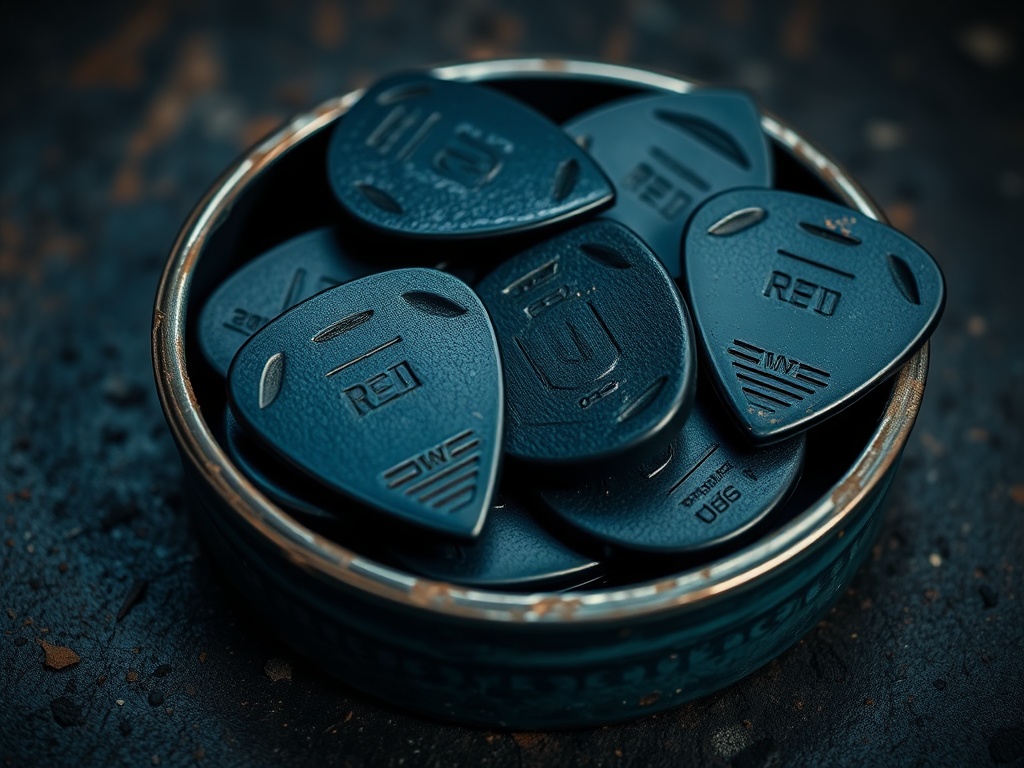
Quick detour—your pick matters more than you think here. If you’re using those flimsy plastic things, your timing gets mushy. Grab a heavier pick so you can actually feel the string resistance.
(No, you don’t need a $40 boutique pick. Get something solid and move on.)
The Bottom Line
You don’t need more theory. You don’t need faster fingers. You need your right hand to stop guessing and start acting like a metronome with attitude.
Keep it moving. All the time. Even when you’re "not playing."
That’s the difference between sounding like practice and sounding like music.
Now go make some noise.