
The One Right-Hand Trick That Fixes 90% of Your Guitar Playing Overnight

Quick Tip
Keep your picking hand moving in a constant down-up motion—even when you’re not hitting the strings—to instantly improve your rhythm and groove.
Alright, listen… if your playing sounds messy, rushed, or just kinda "meh"—I can almost guarantee it’s not your left hand. It’s your right hand acting like it’s late for a bus.
Everybody wants to blame finger strength, speed, or "not knowing enough scales." Real talk? Most players I see—bedroom warriors, weekend giggers, even some session guys—fall apart because their picking hand has zero discipline.
So here’s your one fix. Not ten exercises. Not a 30-minute routine. One thing you can lock in today that’ll make your playing feel like music instead of noise.

The Tip: Lock Your Right Hand to a Constant Motion
Here it is. The whole thing:
Your strumming or picking hand never stops moving.
Even when you’re not hitting strings.
Yeah, I know—that sounds too simple. But this is the difference between sounding like a band and sounding like someone practicing in their bedroom with the TV on.
Most players do this:
- They stop their hand when there’s a rest
- They "aim" for strings
- They hesitate before hitting the next chord
That’s why everything feels stiff.
The fix? Your hand becomes a pendulum. Down-up-down-up. Constant. Like you’re shaking water off your fingers.

Why This Works (The Secret Sauce)
Alright, here’s the part nobody explains right.
Rhythm isn’t about when you hit the strings—it’s about when your hand moves.
When your hand is always in motion:
- Your timing locks in automatically
- You stop rushing fills
- Groove shows up without you forcing it
This is the same reason great rhythm players feel "easy" to listen to. They’re not guessing—they’re riding a physical motion.
It’s like walking. You don’t think about each step—you just keep moving forward.
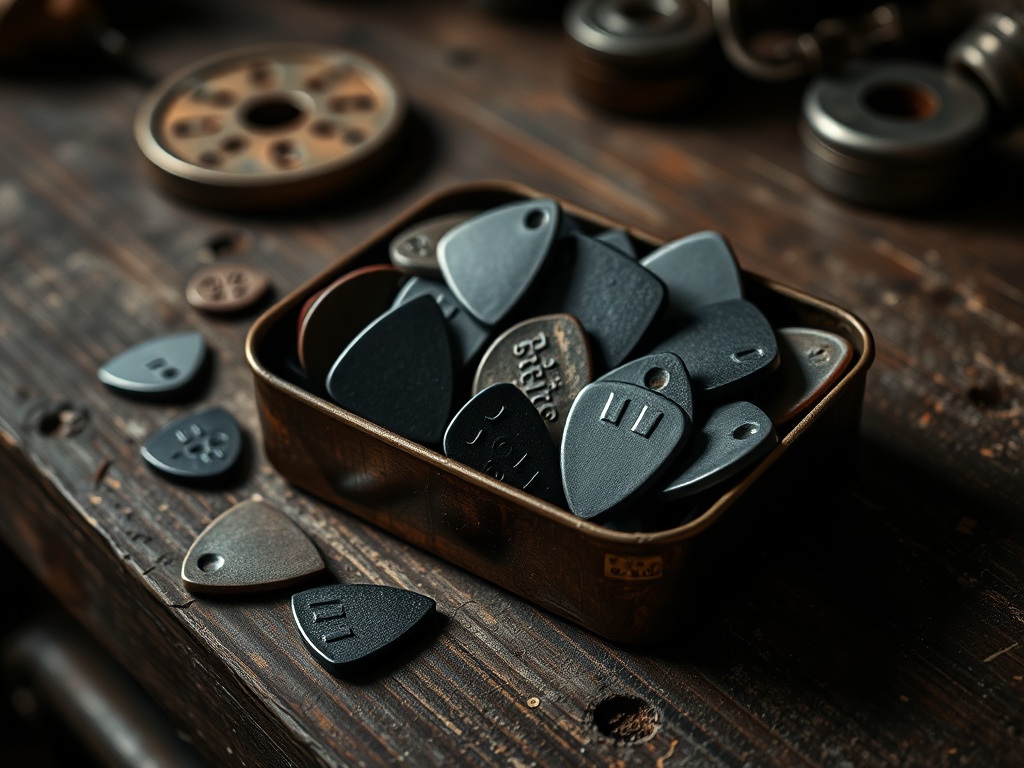
(By the way, if your pick feels like it’s fighting you, grab a heavier one. Those floppy picks turn your rhythm into mush.)
How to Practice It in 5 Minutes
You don’t need a metronome army. Just do this:
Step 1: Mute the Strings
Lay your fretting hand lightly over the strings so everything goes "chuck-chuck."
Step 2: Keep the Engine Running
Strum steady down-up motion. Don’t stop. Ever.
Step 3: Only Hit Some Strokes
Now start skipping hits. Let some strokes pass through air.
Example pattern:
- Down (hit)
- Up (miss)
- Down (hit)
- Up (hit)
Your hand keeps moving, but your ear hears rhythm.
That’s the trick.

Where Players Screw This Up
Let’s call out the usual suspects.
- Stopping the hand: instant groove killer
- Overthinking accents: you’ll sound robotic
- Death-gripping the pick: your tone goes stiff and clicky
If your wrist feels tight, you’re doing it wrong. This should feel loose—like you’re barely holding onto the pick.
Loose hand = better groove. Every time.

Apply It to Real Songs (This Is Where It Clicks)
Take any three-chord song you know. Doesn’t matter if it’s rock, country, or that pop tune your kid won’t stop playing.
Now do this:
- Keep your hand moving nonstop
- Miss strokes on purpose
- Focus on feel, not perfection
Suddenly, it sounds like a song instead of a chord chart.
This is why some players with "less skill" sound better—they’ve got the engine running.
The flashy stuff? That comes later. This is the foundation.

Quick Reality Check
If you only fix one thing this month, make it this.
Forget speed drills. Forget learning 20 scales.
If your right hand is locked in, everything else gets easier:
- Chord changes feel smoother
- Riffs sound tighter
- Solos land better
If it’s not? You’re building a house on sand.
That’s the whole game.
Now go make some noise.