Last‑Minute Gig Prep: 5 Essential Tasks the Night Before a Show

Last‑Minute Gig Prep: 5 Essential Tasks the Night Before a Show
Ever gotten to the venue and realized you forgot the one thing that could've saved you an hour of troubleshooting? I’ve been there—stuck in a cramped dressing room, hunting for a spare string while the sound engineer is already on the clock. A rushed night before a gig can turn a solid set into a disaster.
Here’s the no‑fluff, working‑musician checklist you need to run the night before you step on stage. It’s quick, it’s practical, and it’ll keep you from pulling an all‑nighter on the day of the show.
What gear should I double‑check before I sleep?
First, make sure every piece of your rig is ready to roll. Missed a battery or a broken jack and you’ll be the guy who spends the first 10 minutes of the set fixing a buzz.
- Battery check: Test the batteries in your pedalboard and any wireless devices. Swap for fresh ones if they’re older than six months.
- Cable audit: Run each cable through a quick bend test. Look for frayed insulation or loose connectors. Replace any suspect cables now—don’t wait for a stage‑side “plug‑in‑that‑does‑nothing” moment.
- String inspection: Pull each string and give it a gentle tug. If it feels gritty or the winding is loose, replace it. A fresh set of strings can be the difference between a clean chord and a buzzing mess.
- Pedal order: Verify your signal chain matches the pedalboard essentials you’ve defined. A swapped order can completely change your tone.
- Amp settings: Snap a photo of your amp’s EQ and gain knobs. It’s easy to forget the exact dial‑in after a long day of rehearsals.
How can I secure my setlist and song structure?
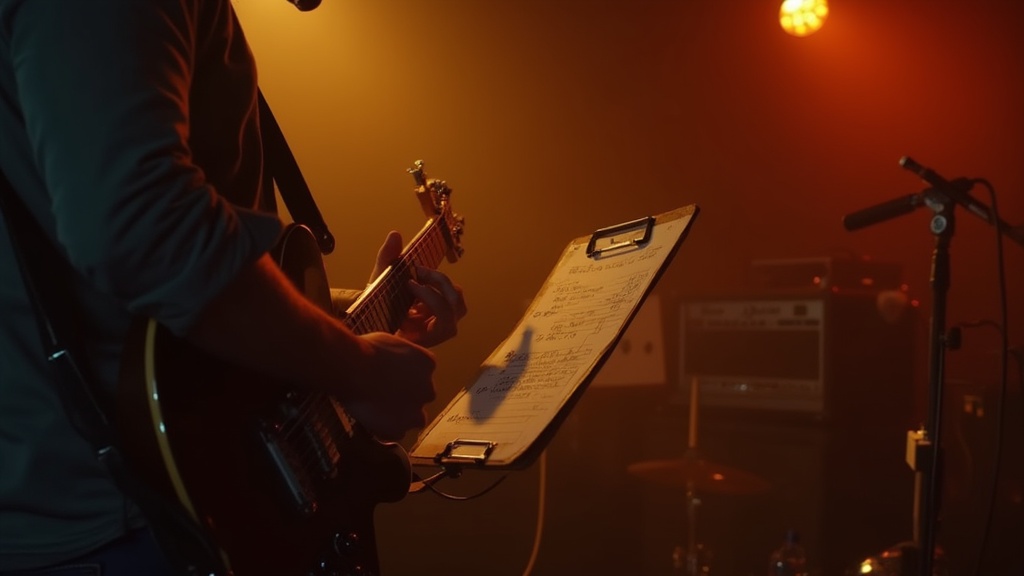
The night before is the perfect time to lock down your setlist. If you’re using the Nashville Number System (NNS), make sure the charts are legible and you have a backup copy.
- Print a hard copy: A scribbled setlist on a napkin is fine for a quick glance, but a clean sheet with chord charts saves you from hunting for the right number on stage.
- Digital backup: Save a PDF on your phone and a copy on a USB stick. If your laptop crashes, you’ve still got the setlist.
- Mark trouble spots: Highlight any tricky transitions you struggled with during rehearsal. Add a quick cue note next to them (e.g., “slow‑down, watch tempo”).
What quick practice routine should I run?
Don’t try to cram a full rehearsal. Instead, run a focused 12‑minute “Couch‑to‑Combo” routine that hits the high‑impact spots.
- Warm‑up (2 min): Finger stretches and a few chromatic runs up and down the fretboard.
- Key transitions (4 min): Play the chord changes that trip you up the most—slow, then ramp up speed.
- Dynamic control (3 min): Alternate between soft picking and aggressive strumming on the same progression. This builds the “right‑hand is king” feel I talk about in The Right Hand Is King.
- Full‑run (3 min): Run through the first three songs of your set at performance tempo. Treat it like a mini‑soundcheck.
How do I prep my rig for a smooth soundcheck?
Soundcheck is where you either nail the tone or spend the next hour arguing with the engineer. A few pre‑soundcheck steps can save you a lot of hassle.
- Pre‑amp test: Plug your guitar into the amp and run a quick “guitar‑to‑amp” test at home. Verify the amp’s gain, EQ, and any built‑in effects are set as you want them.
- Noise triage: If you’ve been battling single‑coil hum (see my Single‑Coil Hum on Stage guide), run the 10‑minute noise‑triage routine now.
- Pedal power: Make sure all pedals are powered (battery or DC) and that you have spare power supplies in your gig bag.
- Stage plot: Sketch a quick layout of where you’ll stand, where the amp sits, and where the mic goes. Share it with the engineer ahead of time if possible.
What mental prep keeps me focused on stage?
Playing a gig isn’t just about the gear; it’s about showing up ready to lock in the groove.
- Visualization: Spend two minutes visualizing the set—imagine the crowd, the feel of the strings, the transitions. It primes your muscle memory.
- Box‑breathing: Do a quick 4‑4‑4‑4 second box‑breathing exercise before bed. It steadies your nerves and improves focus.
- Sleep alarm: Aim for at least seven hours of sleep. A rested right hand plays tighter, and you’ll avoid that “my hand feels like a rusted hinge” feeling.
Takeaway
Running this five‑step checklist the night before a show turns a frantic scramble into a smooth, confident performance. You’ll hit the stage with a tuned guitar, a solid setlist, a quick warm‑up, a ready‑to‑go rig, and a focused mind. Next time you walk into a venue, you’ll be the player who’s already “road‑ready.”
FAQs
What’s the fastest way to test my guitar’s intonation before a gig? Play a 12th‑fret harmonic and compare it to the fretted note; if they’re off, adjust the saddle by a small amount and re‑check.
Do I really need a printed setlist if I have a phone? Yes—phones die, batteries die, and a quick glance at a paper sheet is faster than scrolling through an app in a dimly lit backstage.
How many spare batteries should I bring? At least two fresh 9V batteries for your pedals and a spare AA pack for any wireless devices.
Steps
- 1
Battery check
Test all batteries in your pedalboard and wireless gear; replace any older than six months.
- 2
Cable and string audit
Bend‑test each cable, replace frayed ones, and inspect strings for wear; swap if needed.
- 3
Setlist backup
Print a clean hard copy, save a PDF on your phone and a USB stick, and highlight trouble spots.
- 4
Focused warm‑up
Run a 12‑minute routine: 2 min stretches, 4 min key transitions, 3 min dynamics, 3 min full‑run of first three songs.
- 5
Rig & mental prep
Pre‑amp test, noise triage, ensure pedal power, sketch a stage plot, visualize the set, and do box‑breathing before bed.