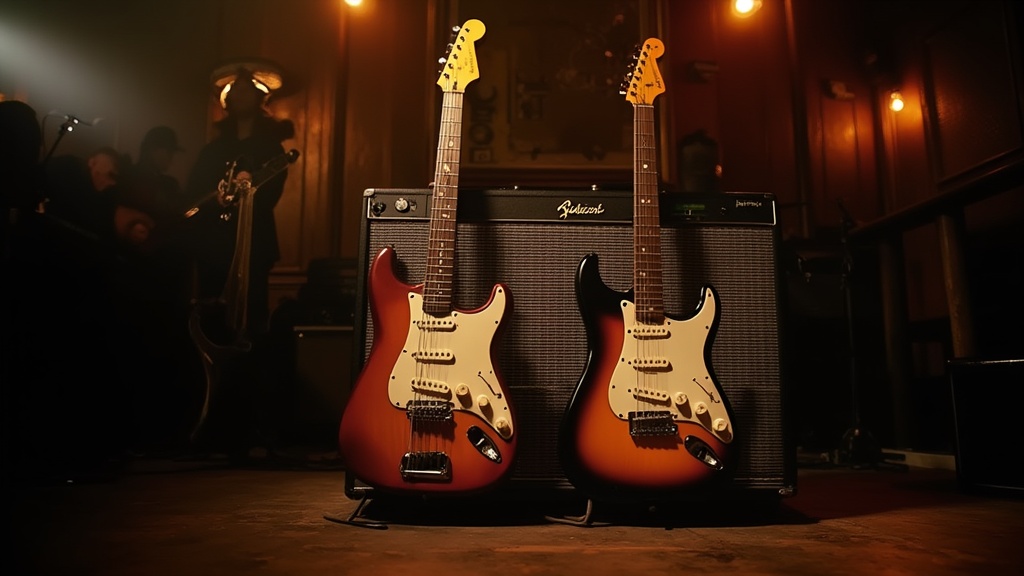
Budget Amplifier Showdown: 5 Affordable Amps for Working Musicians

Can a cheap amp really hold its own on a gig?
Short answer: absolutely. I’ve spent years chasing tone on a shoestring, and the right amp can sound great without a six‑figure price tag. In the first 100 words I’m already telling you why this matters — because every working musician needs reliable gear that won’t empty the wallet.
What should I look for in a budget amp?
Before we dive into the five models, keep these three criteria in mind:
- Power that matches your venue: 15‑30 W is sweet for bars and small clubs.
- Clean headroom and decent gain: You want a tone that stays articulate when you crank it.
- Road‑ready durability: A sturdy chassis and reliable power supply save you headaches on tour.
Which amps actually deliver?
1. Fender Champion 20 — The Swiss‑army knife of practice rooms
The Champion 20 packs a 20‑watt Class D amp, four amp voicings, and a built‑in overdrive. I’ve used it on countless bar gigs; the clean channel stays tight, and the “Turbo” drive gives you that crunchy rhythm tone without getting muddy.
Pros: Light, battery‑compatible, affordable.
Cons: Lacks a true “tube‑ish” feel.
2. Orange Crush 20RT — The British beast that fits in a backpack
Orange’s signature bright midrange cuts through a noisy bar. The 20‑watt combo includes a built‑in reverb and a reliable 1/4" input for pedals. I love the tactile knobs — they feel like a real amp, not a plastic mock‑up.
Pros: Robust build, great mid‑range punch.
Cons: Slightly pricier than the Champion, but still under $200.
3. Boss Katana‑Mini 50 — Portable power for the road‑warrior
The Katana‑Mini packs a 50‑watt Class D engine into a 4‑inch chassis. Its “Brown” and “Crunch” channels sound surprisingly full, and the battery operation means you can plug into a powerbank on the road.
Pros: Battery‑powered, versatile tones.
Cons: Small speaker can get harsh at max volume.
4. Peavey Vypyr‑X2 — Model‑er’s playground on a budget
The Vypyr‑X2 offers a handful of amp sims and a built‑in looper. It’s a great practice amp that also holds its own on stage when you need a quick clean‑plus‑overdrive combo.
Pros: Multiple amp models, built‑in looper.
Cons: The digital feel isn’t for purists.
5. Vox AC4R — Vintage vibe without the vintage price
The AC4R’s 4‑watt Class D circuit delivers that classic Vox chime. It’s perfect for small venues where you need a clean sparkle that sits nicely under a full band.
Pros: Iconic tone, very lightweight.
Cons: Limited gain options.
How do I decide which one fits my rig?
Ask yourself three questions:
- Do I need battery power for last‑minute gigs? (Go Katana‑Mini or Champion.)
- Is a built‑in looper a deal‑breaker? (Peavey Vypyr‑X2 wins.)
- Do I crave that British mid‑range punch? (Orange Crush 20RT.)
Pick the amp that checks the most boxes for your typical gig size and workflow.
Where can I buy these amps?
All five are available at major retailers. Here are a few reliable sources:
- Fender Champion 20 – Official Fender site
- Orange Crush 20RT – Orange Amplification
- Boss Katana‑Mini 50 – Boss official page
- Peavey Vypyr‑X2 – Peavey product page
- Vox AC4R – Vox official
Takeaway
Don’t let a tight budget force you into sub‑par tone. One of these five amps will give you the power, clarity, and durability you need for bar gigs, rehearsals, and small venues. Grab the one that matches your workflow, plug in, and let the rhythm shine.