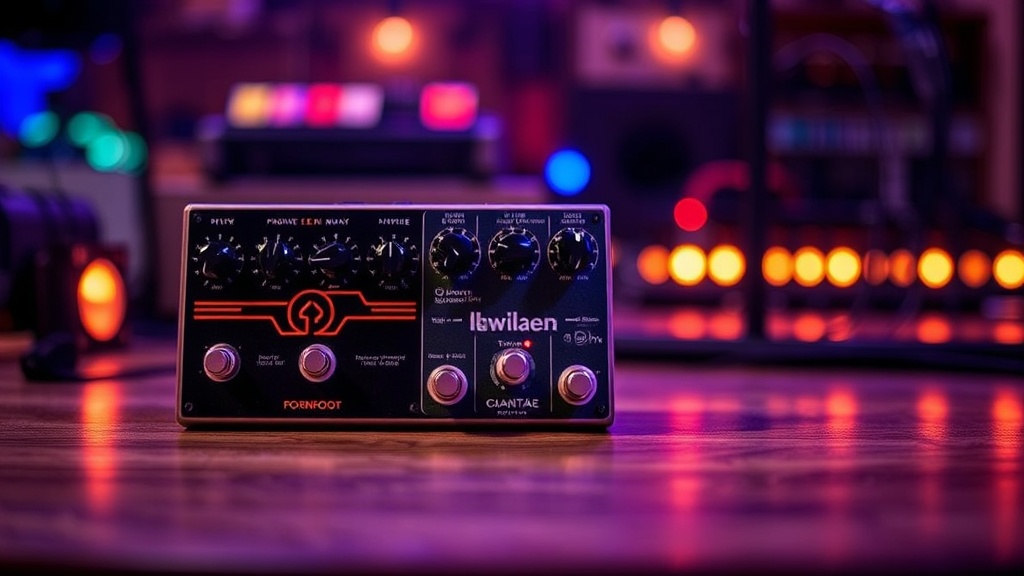
6 Boutique Pedals That Will Transform Your Ambient Soundscapes

The Lush Cloud Reverb
Ethereal Echo Delay
Granular Textures Engine
Shimmering Celestial Plate
Deep Space Modulation
The Infinite Sustain Loop
Many guitarists believe that creating massive, cinematic ambient textures requires a degree in sound engineering or a thousand-dollar rack system. That is a lie. You don't need a degree; you just need the right way to stack your signal chain. This list breaks down six boutique pedals that actually move the needle on your tone, moving past the basic reverb and delay loops to give you something that feels alive.
Ambient playing isn't about playing a lot of notes. It's about how much space you can inhabit between the notes. If you're just layering pedals without a plan, you'll end up with a muddy mess that drowns out your actual playing. I've spent years in smoky clubs where the mix was always a fight, so I know how important it is to have a sound that sits right in the pocket without washing everything out.
What Makes a Boutique Ambient Pedal Different?
Boutique pedals often use high-quality analog components and custom-designed circuits to provide a more organic, responsive reaction to your touch. While a standard digital pedal might just repeat a sound, a high-end boutique unit reacts to your dynamics. If you pick a note harder, the swell or the shimmer responds differently. It feels more like an instrument and less like a computer program.
Most of these pedals focus on the "tails" of the sound—the part where the note decays. That is where the magic happens. If your decay sounds sterile, your whole performance feels stiff. You want a pedal that breathes.
1. The Strymon BigSky
The Strymon BigSky is a high-end reverb workstation that offers an incredible amount of control over massive, ethereal textures. It is the industry standard for a reason. It doesn't just add reverb; it builds an environment. Whether you want a subtle room sound or a cosmic, infinite wash, this thing delivers.
I've seen guys use the BigSky to fill entire gaps in a set when the drummer was taking a break. It fills the room. It’s a heavy hitter, and while it's an investment, the depth of the algorithms is hard to beat.
2. The Chase Bliss Mood MKII
The Chase Bliss Mood MKII is a micro-looper and granular delay that turns even the simplest pluck into a complex, evolving soundscape. This isn't your standard looper. It’s a weird, wonderful box that uses granular synthesis to chop up your signal into tiny pieces and reassemble them. It’s a bit more technical than your average pedal, but it’s the best way to add movement to a static part.
If you find yourself stuck playing the same three chords, throw this on. It adds that "movement" that makes a song feel like it's evolving. It's not just a loop; it's a living texture.
3. The Hologram Electronics Microcosm
The Microcosm creates complex, multi-layered textures by combining granular synthesis with rhythmic delay and reverb. It is essentially a one-man orchestra in a pedalboard footprint. You can take a single note and turn it into a rhythmic, shimmering sequence that sounds like it belongs in a film score.
It’s a bit of a beast to learn, but once you get the hang of it, you won't go back to standard delays. It’s perfect for when you want to add a sense of rhythm to your ambient swells without actually playing a rhythmic part. It keeps the energy up even when you're playing softly.
How Much Does a High-End Ambient Setup Cost?
A professional-grade ambient setup typically ranges from $400 to $1,200 per pedal, depending on the complexity of the features. While these prices seem high, you are paying for the proprietary hardware and the specialized way they handle your audio signal. It is a significant upfront cost, but these pedals hold their resale value remarkably well.
| Pedal Name | Primary Function | Price Range (USD) | Complexity Level |
|---|---|---|---|
| Strymon BigSky | High-End Reverb | $450 - $500 | Moderate |
| Chase Bliss Mood MKII | Granular Looper | $350 - $400 | High |
| Hologram Microcosm | Granular Delay/Rhythm | $600 - $650 | High |
| Walrus Audio Slö | Ambient Delay/Reverb | $200 - $250 | Low |
Don't feel like you have to buy everything at once. I always tell people: start with one great reverb. If you try to buy a whole "dream rig" on a credit card, you'll be broke before you even play a note. You can check the official Wikipedia page for effects pedals to see how these different categories—like delay, reverb, and modulation—actually function and interact with one another.
4. The Walrus Audio Slö
The Walrus Audio Slø is a much more approachable option for players who want deep, lush reverbs without a steep learning curve. It’s a "set it and forget it" kind of pedal. It focuses on swelling and textures, making it perfect for those long, slow builds. It's a great entry point if you're tired of your standard delay but aren't ready to tackle a granular synth.
It’s a workhorse. It doesn't have a thousand knobs, but it does exactly what it says on the box. It’s perfect for adding a sense of depth to your rhythm parts, which helps if you're struggling with making your rhythm guitar sound thicker.
5. The Earthkeeper Cloud Organ
The Cloud Organ is a specialized tool for those who want to move beyond traditional reverb into the realm of organ-like, sustained textures. It uses a unique way of processing your signal to create long, hanging notes that feel much more organic than a standard digital reverb. It’s a specialized piece of gear that works best when you treat it as a texture-generator rather than a standard effect.
It's a bit of a niche tool, but in the right hands, it's a weapon. It adds a sense of weight to your playing that a simple delay just can't reach.
6. The Empress Reverb
The Empress Reverb is a high-fidelity, studio-grade reverb pedal that provides incredible clarity and depth. It is widely regarded for its ability to handle complex signals without losing the high-end detail. If you are playing in a setting where you need to be heard clearly—like a small club or a studio session—this is the one. It won't turn your sound into a muddy soup.
It's a very "clean" sounding pedal. It respects the original tone of your guitar while wrapping it in a massive, wide-open space. It's a reliable piece of gear that won't let you down when the mix gets heavy.
Why Should You Care About Signal Chain Order?
Placing your ambient pedals in the correct order prevents your signal from becoming a washed-out mess that loses all definition. Generally, you want your delays to come before your reverbs, and your modulation (like chorus or vibrato) to come before your heavy time-based effects. If you put a massive reverb before a heavy delay, the delay will repeat the "wash" rather than the actual note, which often sounds chaotic and unmusical.
A common mistake I see is people running their reverb at the very end of the chain, which is fine, but then they try to run a heavy distortion after it. That's a recipe for disaster. You'll end up with a distorted, unusable noise. If you want to learn more about how to structure your gear properly, check out my post on building a cohesive rig.
Think of your signal chain like a construction project. You need a solid foundation (your amp and drive) before you start adding the decorative elements (the ambient pedals). If the foundation is weak, the decorations won't matter. You can't build a house on sand, and you can't build a great ambient sound on a thin, weak signal.
Remember, the goal isn't to hide behind the effects. The goal is to use the effects to highlight the way you play. Whether you're using a $600 Microcosm or a simple $100 reverb, the way you control your dynamics and your touch is what actually makes the music. Don't let the gear become a crutch; let it be a tool.