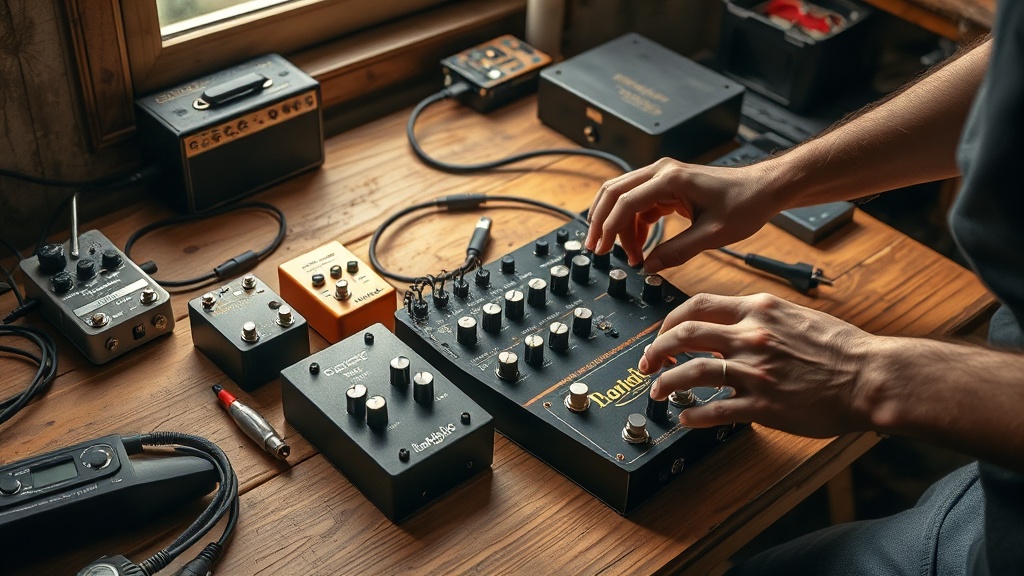
5 Budget Hacks for Tight Home Rhythm Recording

Use a Direct‑In (DI) box instead of miking an amp
Record a clean line‑level signal with a DI like the Focusrite Scarlett 2i2 to avoid room reflections and noise.
Upgrade to shielded cables — cheap doesn’t mean noisy
A well‑shielded cable (see the high‑quality guitar cable image) cuts hum without costing a fortune.
Keep your power clean with a surge‑protected strip
A clean power strip prevents ground loops and keeps your interface and headphones on the same line.
Tame room reflections with cheap foam or a blanket
Use a few foam panels or a moving blanket to absorb reflections and tighten your sound.
Record at the right gain and sample rate
Set gain so the LED stays green, record at 48 kHz/24‑bit, then bounce to 44.1 kHz/16‑bit WAV for sharing.
5 Budget Hacks for Tight Home Rhythm Recording
Ever tried to record a rhythm part in a tiny apartment and ended up with a muddy mess? I’ve been there—tour bus, dive bar, cramped Nashville flat—and learned that you don’t need a pricey studio to get a clean, punchy track. Below are five no‑fluff, budget‑friendly tricks that will tighten up your home rhythm recordings in minutes.
What’s the single biggest mistake that ruins home rhythm tracks?
Most players over‑think the gear and under‑think the signal chain. The result? Noise, hum, and a lack of definition. Let’s fix that.
1. Use a Direct‑In (DI) box instead of miking an amp
Plug your guitar straight into a clean DI (like the Focusrite Scarlett 2i2) and record the line‑level signal. You’ll get a noise‑free tone and avoid room reflections.
2. Upgrade to shielded cables — cheap doesn’t mean noisy
Invest in a decent shielded cable. Check out the high‑quality guitar cable I use on stage. The extra shielding cuts hum without breaking the bank.
3. Keep your power clean with a surge‑protected strip
A clean power strip (see my Power Strip Essentials) prevents ground loops and keeps your interface and headphones on the same clean line.
4. Tame room reflections with cheap foam or a blanket
Hang a few foam panels behind your amp or drape a moving‑blanket over the doorway. The extra absorption stops the sound from bouncing back into your mic or DI.
5. Record at the right gain and sample rate
Set your interface gain so the input LED stays green—no clipping. Record at 48 kHz/24‑bit for headroom, then bounce to 44.1 kHz/16‑bit WAV for easy sharing.
How do these hacks fit into a real‑world workflow?
Start with the DI, plug in your shielded cable, power everything off a clean strip, treat the room, and hit record. In under ten minutes you’ll have a tight rhythm track ready for a mix.
Takeaway
Recording rhythm guitar at home doesn’t have to be a circus. With a DI, a good cable, clean power, a bit of acoustic treatment, and proper gain staging, you can capture a professional‑sounding rhythm track on a shoestring budget.
Related Reading
- Road‑Ready Guitar Maintenance — keep your instrument in top shape for those sessions.
- Pedalboard Essentials — a quick cheat sheet if you decide to add a boost.
- The Right Hand Is King — tighten your technique to match your clean signal.